01 · Listen
It listens for digital presence.
Phones, watches, earbuds, laptops and other connected devices announce wireless identifiers as part of normal operation. Memora notices those signals.
A silent digital witness for the people, places and moments that matter, built around presence, not surveillance.
Most days nothing happens. I like knowing it's there for the day something does.
Simple setup. No tech skills. Charge it a few times a year. No dashboard babysitting. No daily ritual. The system is designed to disappear into your ordinary life.
Phones, watches, earbuds, laptops and other connected devices announce wireless identifiers as part of normal operation. Memora notices those signals.
Digital ID. Time. Proximity. Movement. Each observation becomes part of a timeline you can review later if something happens.
Events are encrypted, time-stamped, hash-chained and backed up through M1's own cellular connection.

On the go. Drop M1 into a handbag, backpack or case and take your digital witness with you.
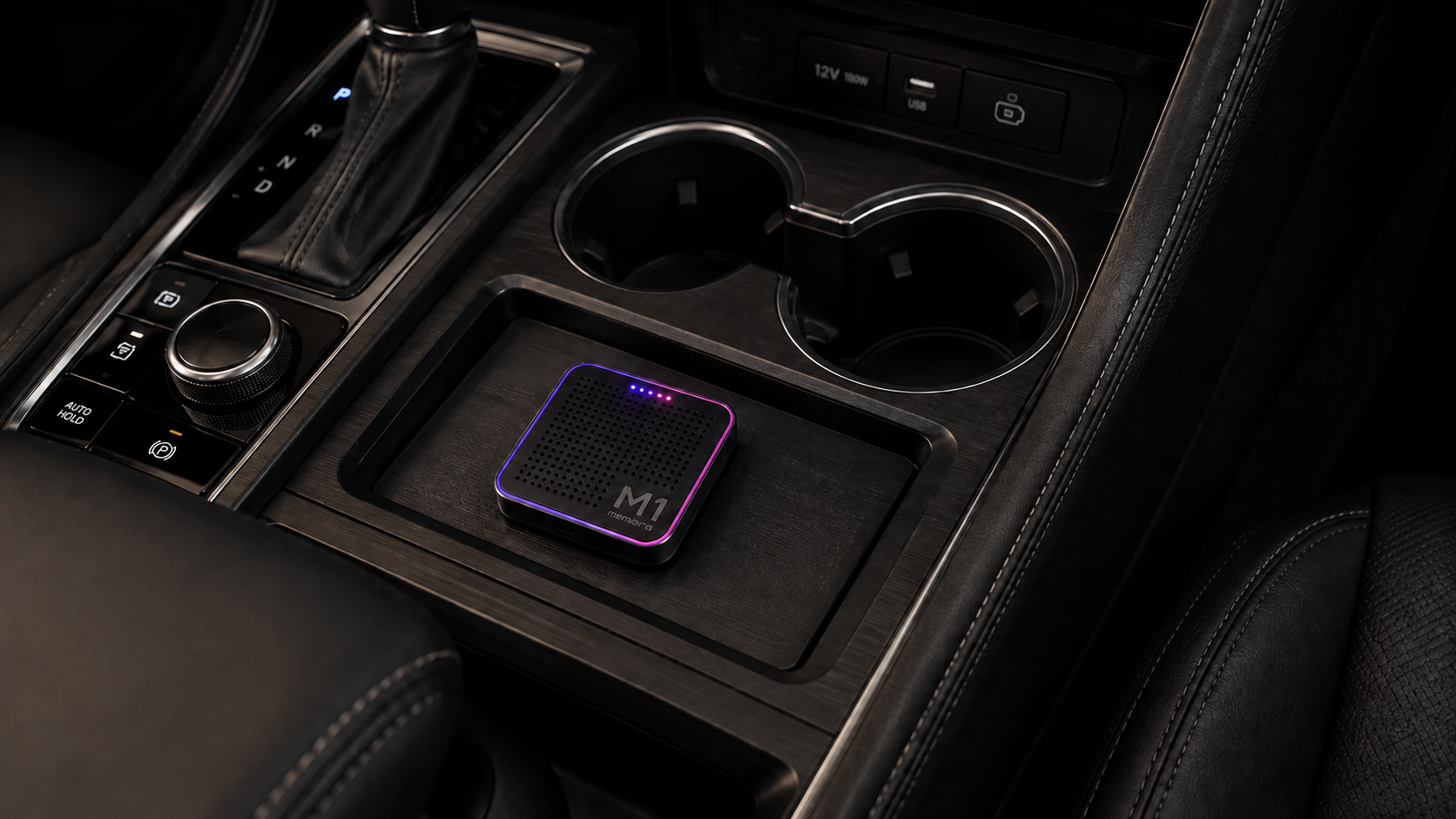
Car. M1 rides with the vehicle while hidden Pins create object-specific tripwires.
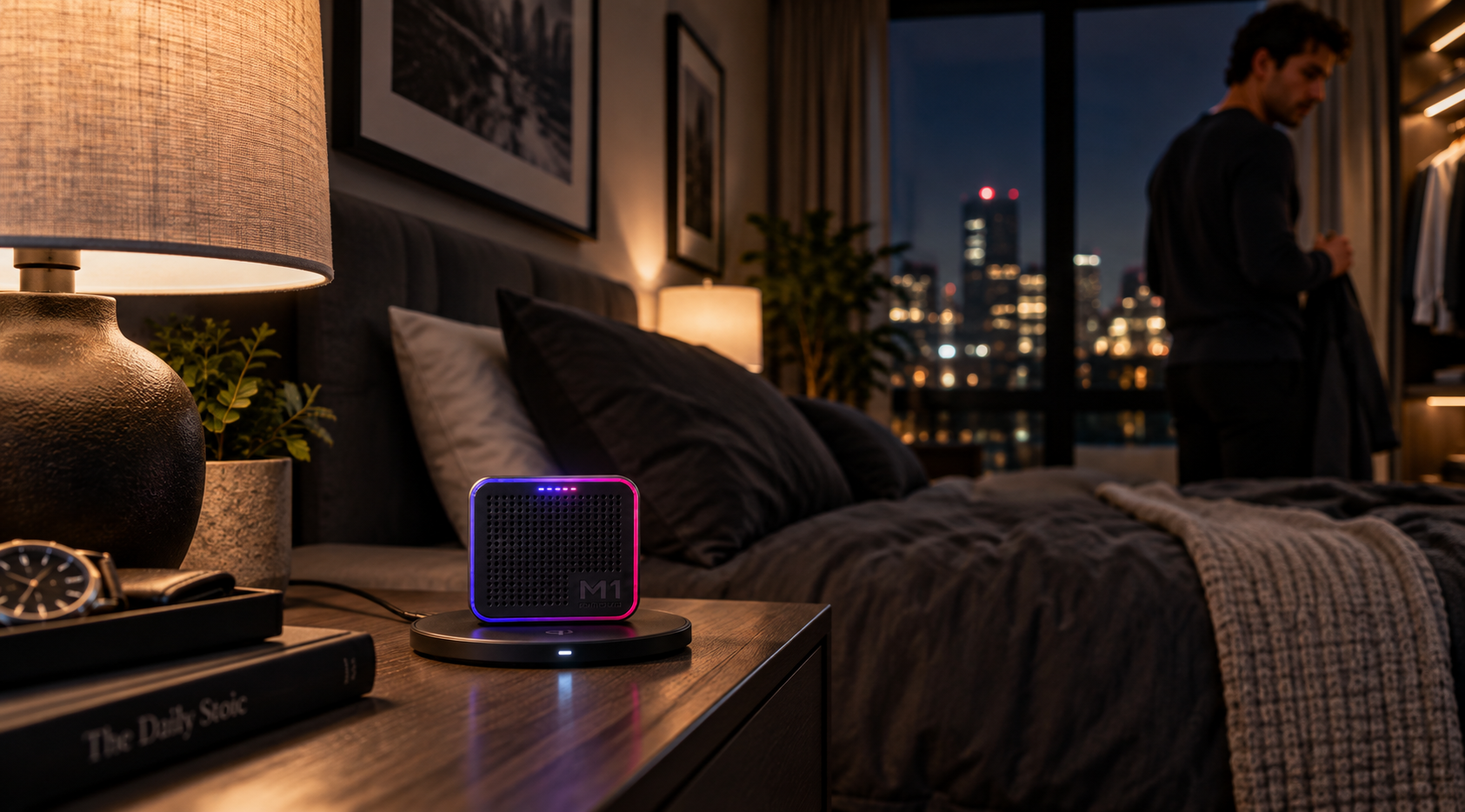
Home. M1 lives quietly in the background while Pins protect the things throughout your space.
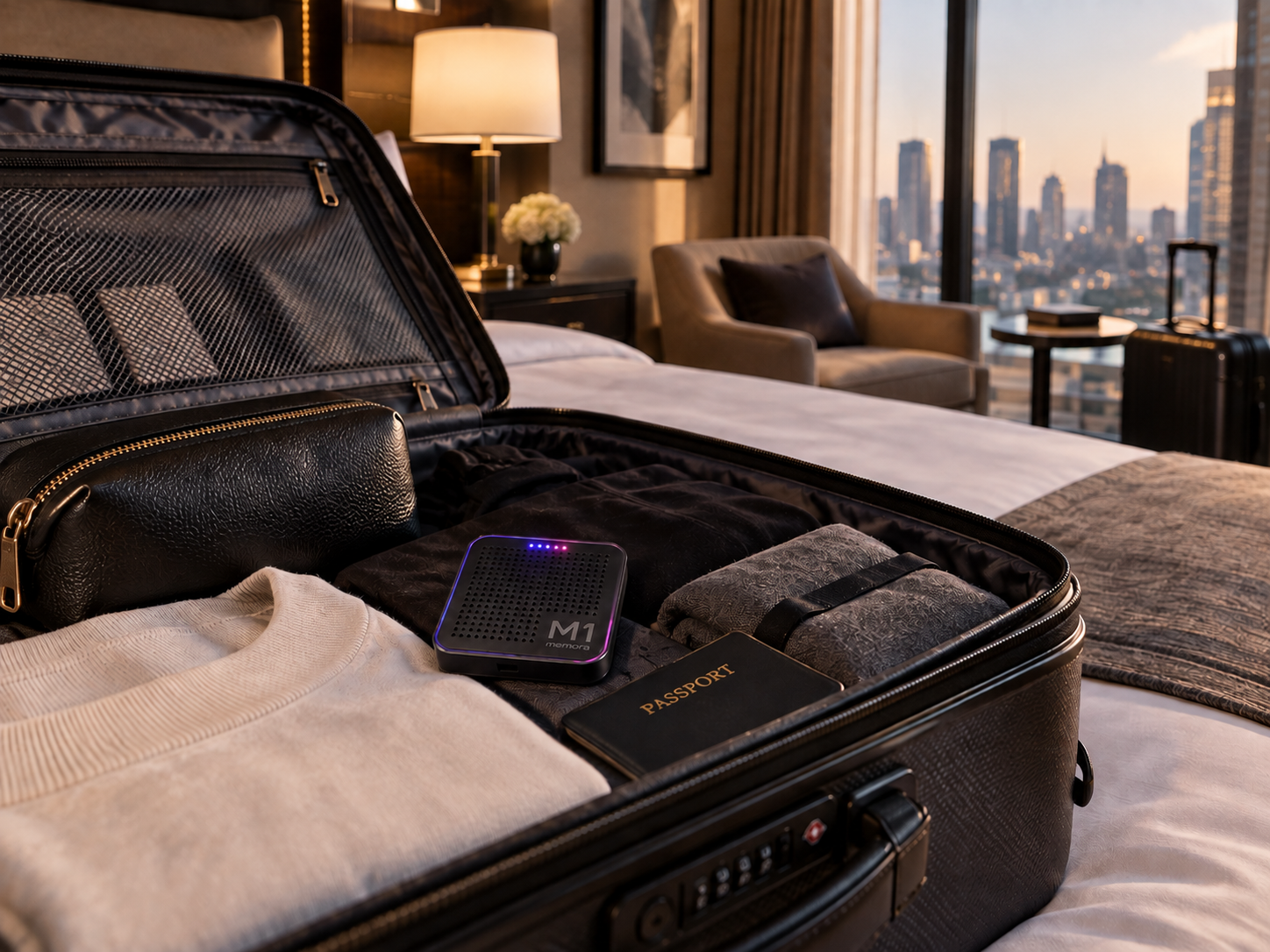
Travel. Luggage, hotels, rentals and unfamiliar places can carry the same memory layer.
Proximity Logs show what M1 observed around you: anonymous device IDs, time, distance context and event history, without pretending an identifier is a person's identity.
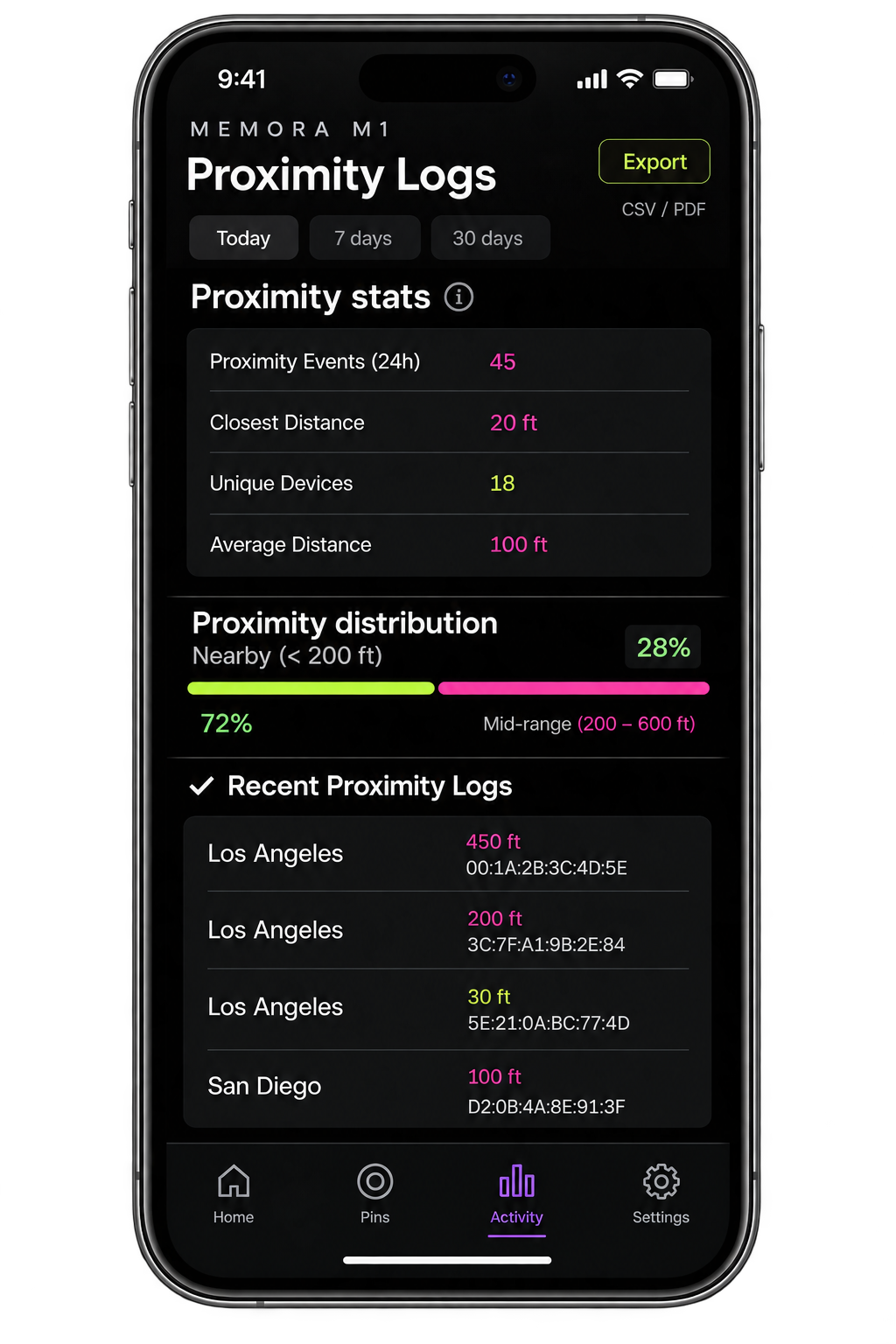
A $10,000 handbag. A room full of people. One thief. The tracker ends up in the trash can, the proximity logs identify the thief and provide the missing evidence.
Memora Pins quietly tell M1 which protected object moved. A screw for hard surfaces. A button for fabric. The same system, hidden in plain sight.
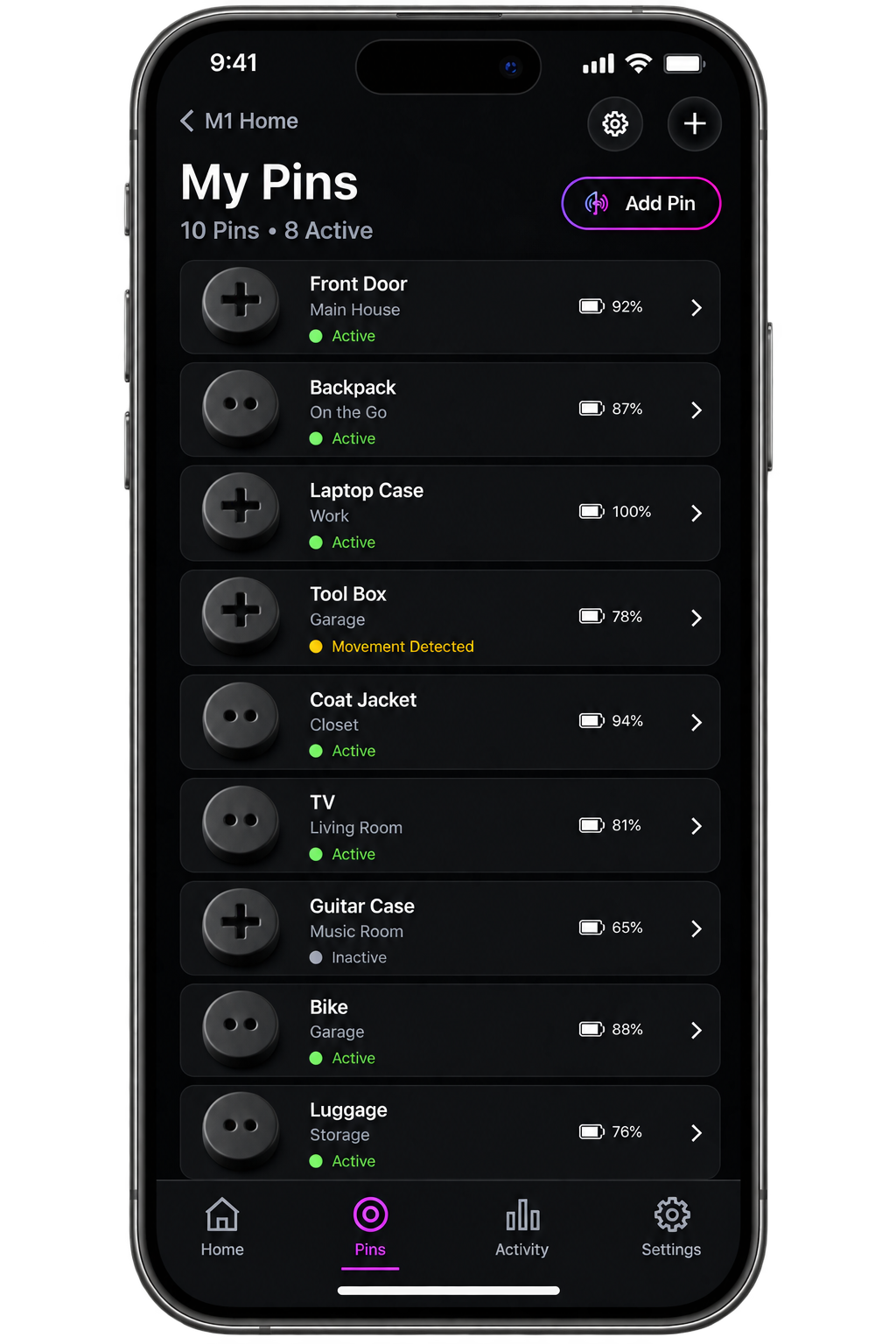
A screw on the things you own. A button on the things you wear. Memora Pins give individual objects their own silent connection to M1.
Memora M1 doesn’t wait for another person’s phone to pass nearby. It connects directly, extends protection with hidden Pins, and preserves the record when something changes.
Memora M1 uses its own LTE-M connection. Your record doesn’t depend on strangers carrying compatible phones nearby.
Pins extend Memora into the objects and places that matter, creating a personal proximity network around your world.
When something moves, Memora preserves the protected object, the time, and the nearby digital presence around that moment.
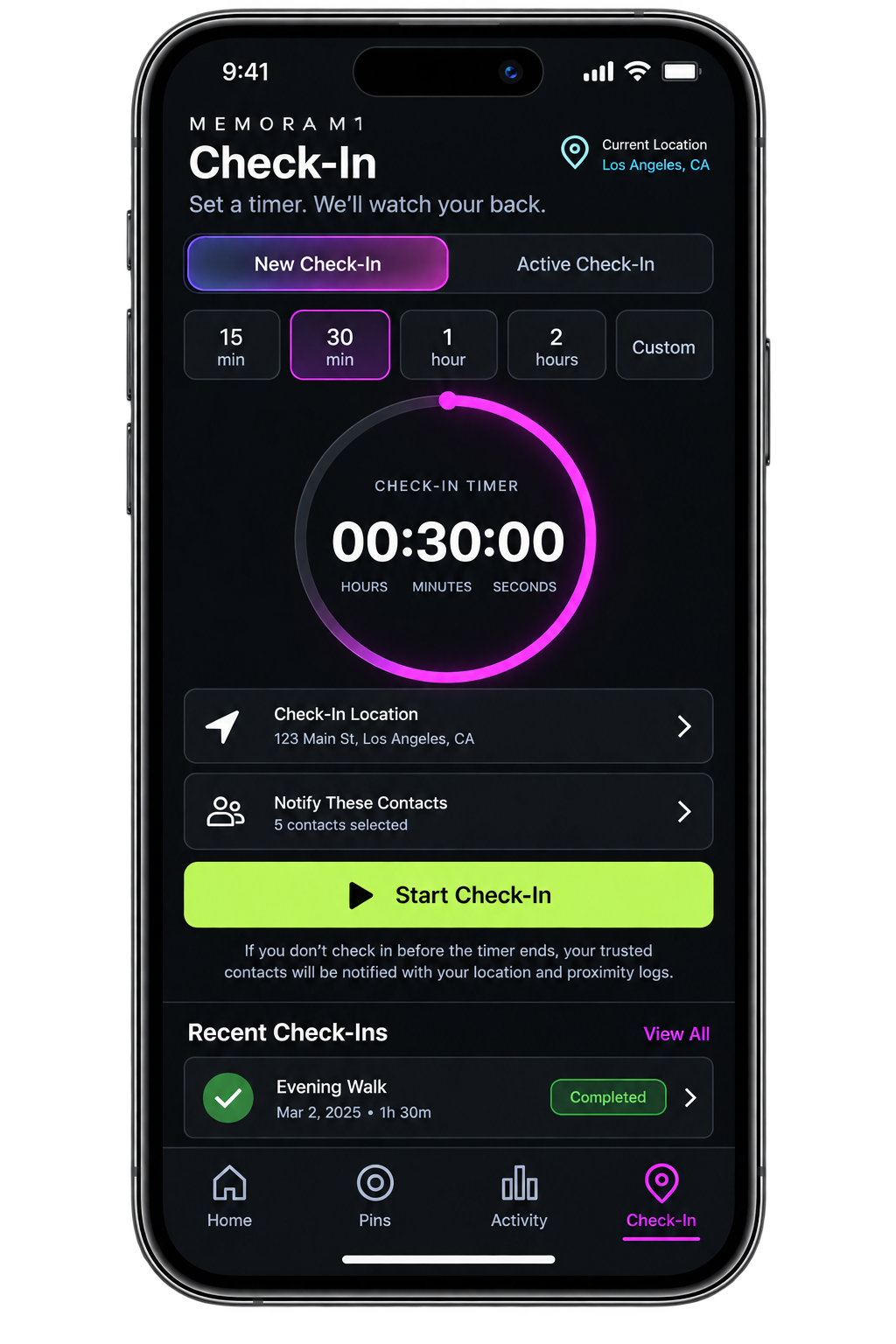
Set a Check-In before a walk, a date, a late shift, or anytime you want an extra layer of security.
Start a Check-In before a late shift, a date, a walk to your car, or anywhere you want the people you trust to know when to expect you back.
Every Memora Pin carries a hidden QR code that only appears under UV light. Scan it to verify that the pin, and the object it protects, is registered to your account.
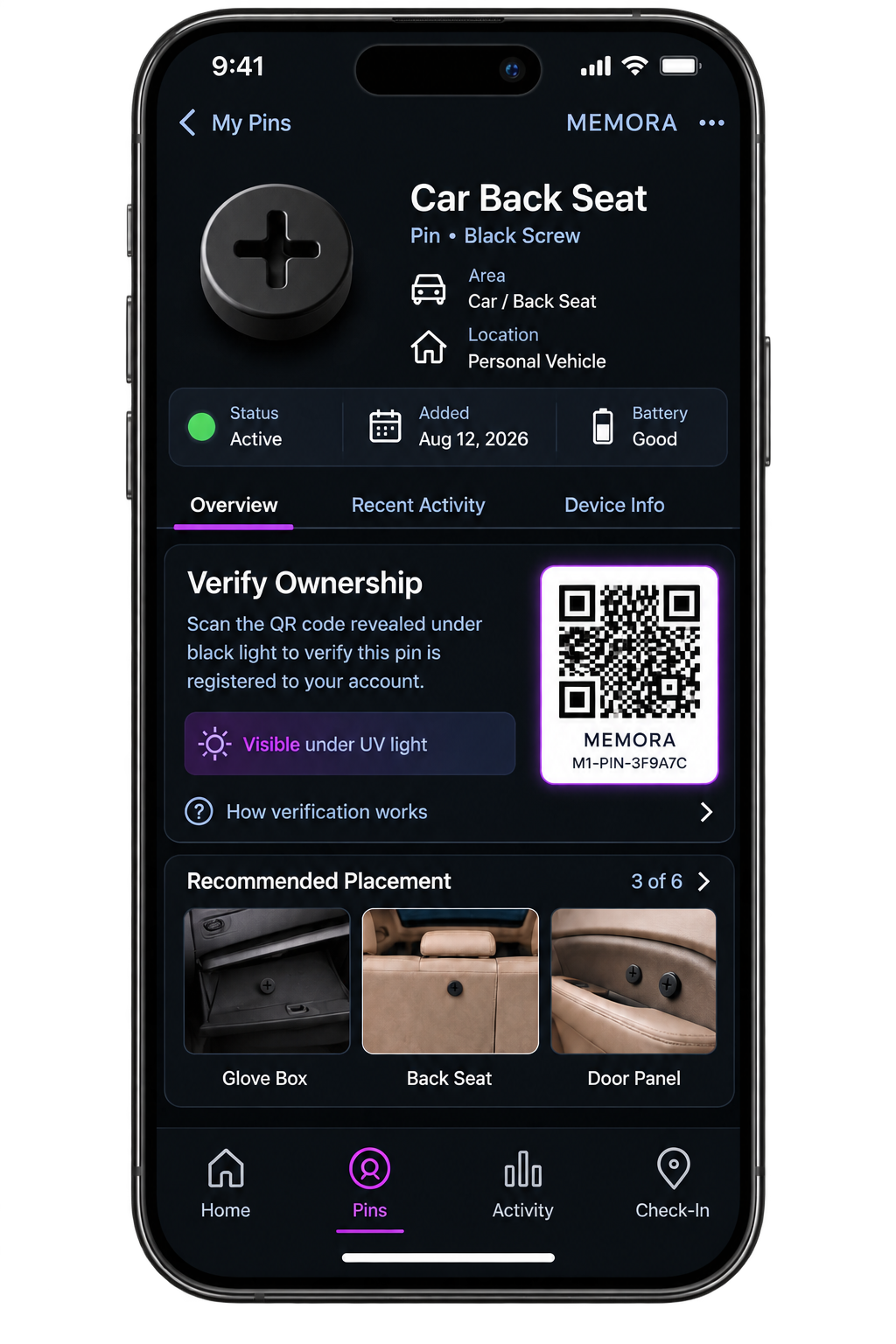
The tracker was gone. The plates were gone. The car had been stripped for parts.
But one Memora Pin remained.
Under UV light, its hidden QR code revealed exactly who the car belonged to.
The product is useful because it remembers an event, not because it lets someone watch another person in real time.
You can review your proximity logs and event history, but the everyday consumer experience is not a people-tracking feed.
The IDs M1 records are not names, messages, photos or accounts. They are the public wireless identifiers devices already broadcast.
Live recovery capabilities belong inside an authorized investigation, with access controlled and auditable.
Memora M1 is designed for the long stretches when nothing happens and the few moments when everything matters. Built to stay out of the way, low-power monitoring, motion-aware escalation and its own cellular connection keep the system ready without turning it into another device you have to babysit.
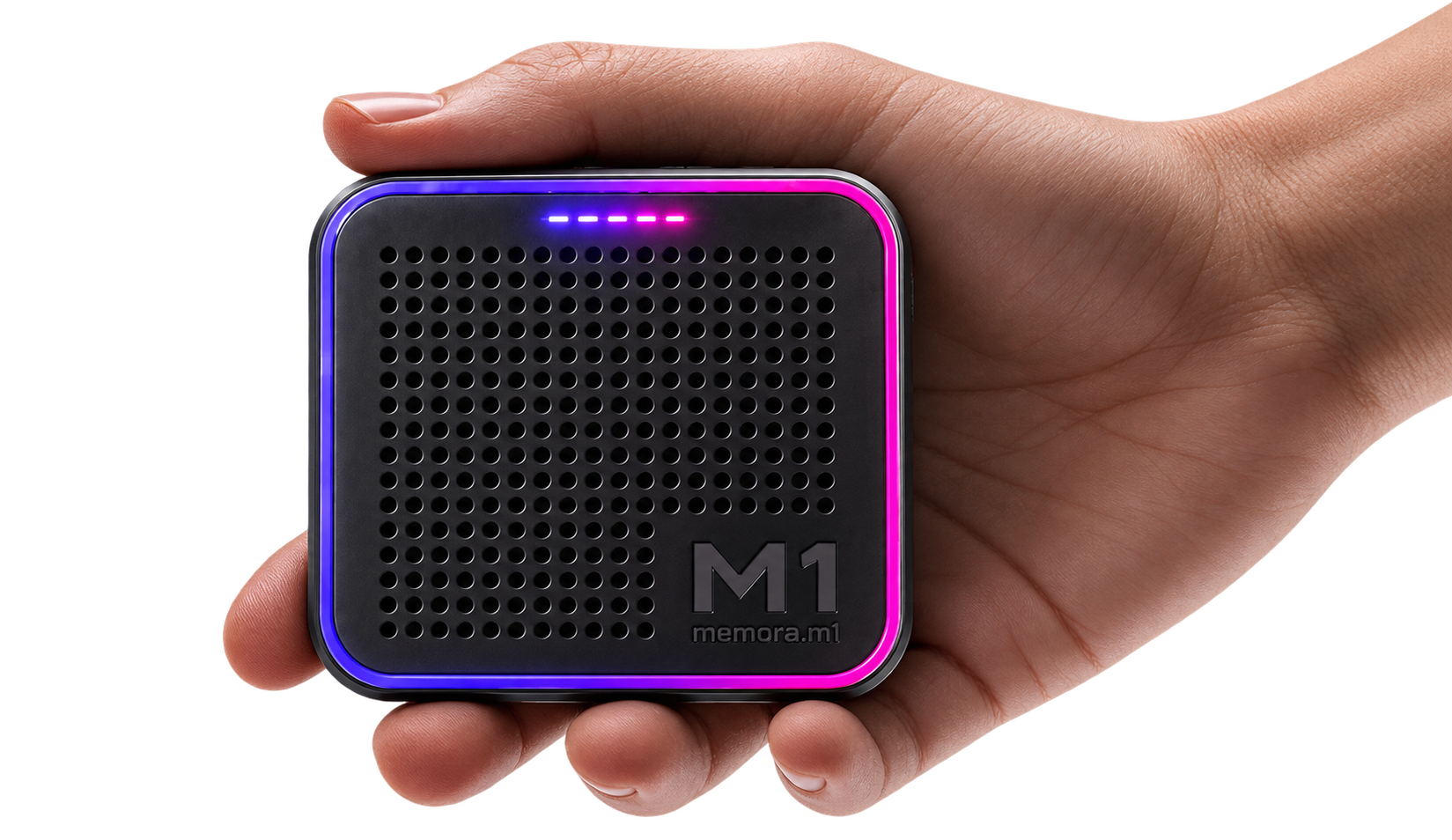
Nearby Bluetooth and Wi-Fi identifiers, time, signal context and movement events, without recording faces, voices, messages or accounts.
Every scan is cryptographically linked to the one before it. Alter a single byte and the chain flags it. This is what makes a log admissible instead of arguable.
We asked a former federal prosecutor, a former family court judge, and a forensic investigator who has worked with INTERPOL and the FBI how they evaluate digital evidence: device proximity, timestamps, corroboration, and digital trails. They weren't told about Memora M1. We wanted their unfiltered answers.



From your neighborhood to the other side of the world, Memora M1 is built to stay connected wherever life takes it. Connecting directly to cellular networks across supported countries. No Find My networks. No nearby phones required.
AirTags and Tile are finders — they tell you where something is. The Memora M1 is an evidence device — it tells you who was near your item when it was disturbed. It logs every Bluetooth and Wi-Fi device in range, encrypts the data, and uploads it via LTE-M direct to the cloud. No phone relay required.
Every scan captures MAC addresses of nearby BLE and Wi-Fi devices, signal strength for distance estimation, device type classification, GPS coordinates, and precise timestamps — all cryptographically chained and encrypted before transmission.
The Memora M1 captures publicly broadcast wireless signals — the same BLE and Wi-Fi advertisements every device around you is already transmitting. Data is collected passively, encrypted, and hash-chained for integrity verification. The forensic architecture is designed to meet requirements for digital evidence admissibility.
Yes. The Memora M1 uses LTE-M cellular connectivity to transmit data directly to the cloud. No phone relay, no Wi-Fi, no Apple or Google network. Completely independent — which is exactly what makes it reliable as evidence.
Your data is your data. You control it, you export it, you decide who sees it. If you choose to share logs with law enforcement, the chain-of-custody export provides forensic-standard documentation. There is no backdoor access for anyone.